

Updated:
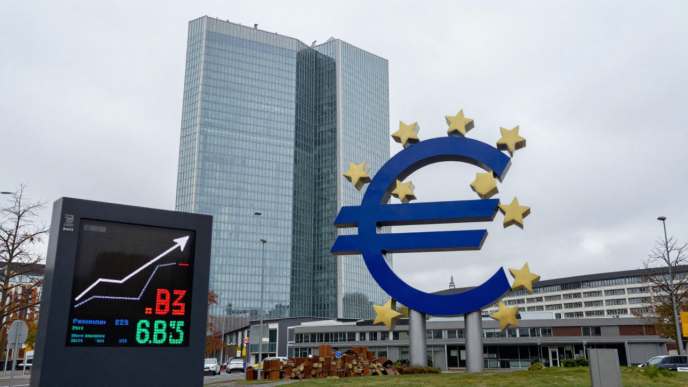
European Central Bank policymaker Primož Dolenc said on Thursday, October 8, that the ECB may need to continue raising interest rates as inflation risks remain tilted to the upside. But the Slovenian central bank governor said neither the timing nor the size of any further increase could yet be predicted, emphasizing that decisions would depend on incoming data at each policy meeting.
His comments come after euro-area inflation reached 3.8% in September, nearly twice the ECB’s 2% target, and the bank raised its deposit rate twice this year to 2.5%. Policymakers are assessing whether a sharp energy-cost increase associated with the Iran war will feed through into prices more broadly, or remain concentrated in volatile components such as energy.
Energy costs drive concern, while core inflation offers some reassurance
Dolenc said persistently elevated inflation in the ECB’s September projections, alongside unresolved conflicts in the Middle East, Ukraine and elsewhere, supported moving policy rates toward more restrictive territory. He said the Governing Council would decide “on a meeting-by-meeting basis,” using incoming evidence rather than committing to a preset path.
September’s inflation reading was above expectations, but Dolenc stressed that energy had accounted for much of the increase. Core inflation, which excludes volatile components including energy, had remained relatively stable, he said, suggesting that higher energy costs had so far passed through only to a limited extent to underlying categories, particularly services.
That distinction matters for the policy debate: a temporary energy shock can lift headline inflation without necessarily creating persistent price pressure across the economy. Dolenc said the core data offered some reassurance that broader inflation pressures remained contained, while cautioning that the evidence did not remove the risk of additional increases.
Gas storage and food prices add to upside risks
Dolenc identified several routes through which inflation could rise further. Energy prices could climb again, and low natural-gas storage levels ahead of winter were a concern because a jump in wholesale gas prices can reach retail prices more quickly.
Food prices also faced potential pressure from high input costs, droughts and El Niño, he said. Those risks add to uncertainty about how long the recent inflation surge may last, although the interview did not establish a specific forecast for their effects or quantify the contribution each might make.
The ECB’s September policy decision raised the deposit facility rate to 2.5%, effective September 16. At that decision, the bank’s baseline projections put euro-area headline inflation at an average of 3.0% in 2026, 2.5% in 2027 and 2.1% in 2028. Those projections provide the policy backdrop, but they do not determine whether another increase will follow: Dolenc said the bank would evaluate the incoming evidence before deciding.
Resilient growth complicates the outlook
Economic strength is another factor in Dolenc’s assessment. He said euro-area output grew at its fastest pace in four years in the second quarter, exceeding its potential, despite the energy-price surge having been expected to erase much of the bloc’s growth this year.
He attributed much of the resilience to household consumption and services spending, and said survey indicators suggested that strength could persist. Stronger demand may add to inflation risk, but the interview also noted a countervailing concern: higher longer-term borrowing costs could weigh on activity more than expected.
ECB Executive Board members Philip Lane and Isabel Schnabel have warned about the potential economic drag from rising yields, according to Reuters. Dolenc said monetary policy was still being transmitted broadly and evenly across the euro area, and that he had not seen rising yields causing a destructive effect on other parts of the economy.
Next rate decision remains data-dependent
Dolenc’s remarks signal openness to further tightening, not a commitment to a particular increase or date. He said the scale and timing would be determined by the Governing Council as data arrive, leaving the next steps dependent on inflation developments and how energy costs affect the broader economy.
The immediate question for policymakers is whether the current energy-led rise stays largely in headline inflation or begins to appear in wages and other goods and services. Dolenc pointed to limited pass-through so far, but identified energy, winter gas supply, food costs and unexpectedly resilient growth as reasons the inflation outlook remains exposed to upside risks.