

Updated:
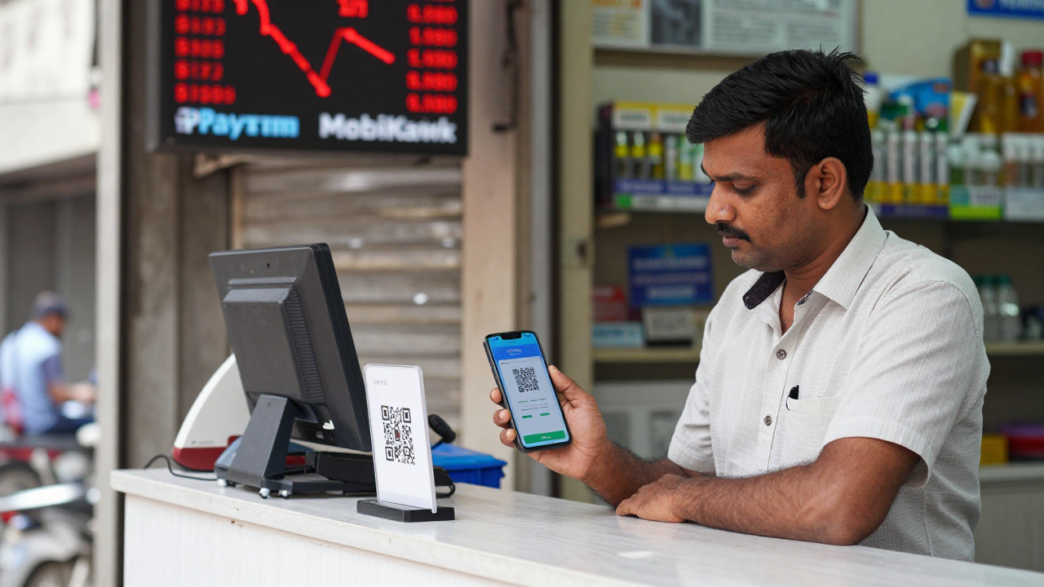
Shares of Paytm parent One 97 Communications and One MobiKwik Systems fell in Indian trading on Thursday, October 8, after CNBC-TV18 reported that industry groups had asked for a delay to new merchant fees on some Unified Payments Interface transactions. The proposed charges are due to begin October 15, but sources told the broadcaster that a move to January 2027 was under consideration.
The National Payments Corporation of India (NPCI), which operates UPI, had not announced a final decision. Reports said it was consulting stakeholders and discussing the requests with the Finance Ministry. The uncertainty unsettled investors who had treated the fee framework as a possible new source of revenue for digital-payment companies.
Stocks retreat as rollout timing comes into question
Paytm and MobiKwik were among several payment-related stocks to decline during the session. Moneycontrol reported that at 10:06 a.m. local time Paytm was down 5.29% at 1,640.30 rupees, MobiKwik had fallen 6.67% to 239 rupees, and Pine Labs was down 2.66% at 172.95 rupees. Prices moved further during the day: NDTV Profit reported intraday losses of as much as 10% for Paytm and 8.43% for MobiKwik.
The variation in reported prices and declines reflects different snapshots during a volatile trading session. The broader significance was that investors were reacting to uncertainty about when the proposed fee rules might take effect, rather than to a confirmed cancellation of the framework. Contemporary reports said the stocks had previously gained on expectations of potential monetization from eligible UPI transactions.
What the proposed MDR framework would cover
The planned merchant discount rate, or MDR, is a fee on certain person-to-merchant UPI payments. Reports on the proposal said a 0.4% rate would apply to eligible transactions above 2,000 rupees, with the merchant—not the consumer—responsible for paying the fee. CNBC-TV18 also reported a cap of 300 rupees for transactions of 75,000 rupees and above, and a separate flat 5-rupee charge for selected categories.
The proposed start date is October 15, 2026. Moneycontrol reported that the UPI Steering Committee had set the 0.4% rate for transactions above 2,000 rupees in September. But merchant organizations and companies have sought changes, including more time to prepare, a higher threshold below which no fee would apply, and a phased introduction.
Merchant groups cite readiness and seasonal concerns
Reports citing industry sources said traders and associations were concerned that implementing charges during the festive-sales period could raise costs for businesses, including small retailers and micro, small and medium-sized enterprises. Moneycontrol also reported that industry participants had raised confusion about differing rates, policies and which transactions would qualify.
The requests to defer the rollout were reportedly sent to NPCI and the Finance Ministry. CNBC-TV18 said the matter had recently been discussed by the UPI Steering Committee, while Moneycontrol reported that NPCI could make a decision within the next two days as discussions with the ministry continued. Those timelines were attributed to sources; neither report described a formal decision to change the October 15 date.
A potential change to a largely zero-fee system
The proposed charges would mark a shift for merchant UPI payments, which have largely operated under a zero-MDR framework. The new rules have been viewed by payment businesses and investors as a possible way to generate fees on some transactions, though the reports did not establish how much revenue any individual company would earn or how the proceeds would be distributed.
Reserve Bank of India Governor Sanjay Malhotra addressed the possible effect of a small fee on UPI use on Wednesday, Moneycontrol reported. He said he did not expect such a charge to have a major impact on transaction volumes and said the central bank had not observed a decline at that point. His remarks concerned transaction activity, not NPCI’s pending decision on the requested delay.
Decision still pending
As of Thursday’s reports, October 15 remained the scheduled start date, while a postponement to January 2027 was a request under consideration. Whether NPCI will approve a delay, amend the proposed thresholds or rates, or keep the original timetable was not yet known. The next reported step was an NPCI decision after consultations with stakeholders and discussions involving the Finance Ministry.