

Updated:
Malaysia is expected to present a moderately expansionary 2027 budget on Friday, October 9, with Prime Minister and Finance Minister Anwar Ibrahim facing competing demands to ease household cost pressures and contain public spending. Analysts cited by Reuters expect targeted assistance and possible tax relief, but say a broad stimulus or major new taxes are unlikely as the government tries to preserve its fiscal consolidation plans.
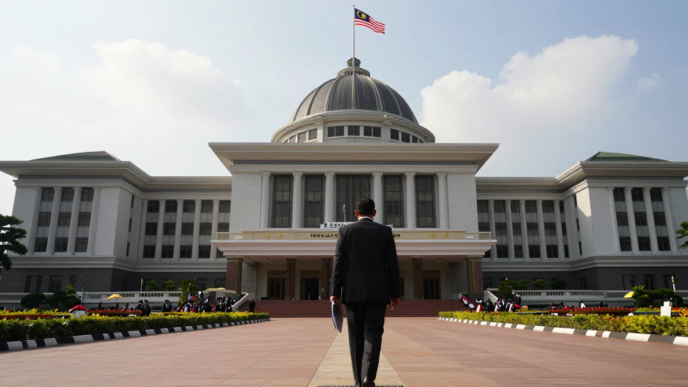
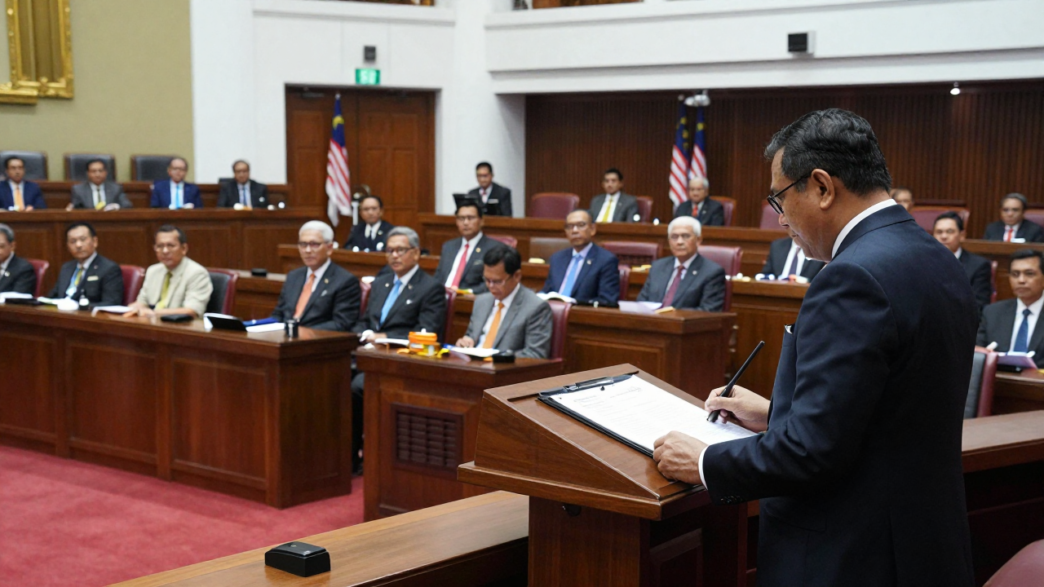
The announcement comes as political tensions within Anwar’s governing alliance have fuelled speculation that a general election could be called before it is constitutionally due by February 2028. Anwar is scheduled to deliver the budget in Parliament at 3:30 p.m. local time, according to Reuters; the Finance Ministry has also confirmed October 9 as the tabling date.
The government’s choices are complicated by higher fuel-subsidy costs linked to an energy-price shock, accumulated public debt and a continuing effort to narrow the deficit. At the same time, the economy expanded 5.7% in the first half of 2026, and the central bank expects full-year growth of about 5%, Reuters reported.
Targeted support is expected, not a broad stimulus
Economists expect the budget to focus on assistance that can reach households without committing the government to a large new spending package. Possible measures include cash transfers for lower-income groups and personal income-tax relief, according to analysts cited by Reuters. These remain expectations, not announced budget provisions.
RHB economist Alexander Chia said in a note cited by Reuters that election expectations raise the prospect of a “feel-good” budget, while tight public finances make the task difficult. RHB expects the government to lean on better tax compliance and administration, and to close revenue leakages, rather than impose major new taxes.
The Finance Ministry’s August pre-budget statement gives a broader account of the government’s stated priorities. It identifies 10 focus areas, including cost-of-living pressures, regional development gaps, investment growth, workers’ welfare and wages, and energy, food, climate and cyber security. The statement describes priorities for consideration, not final spending commitments.
Fuel subsidies are a key fiscal uncertainty
Malaysia’s 2026 fuel-subsidy bill could reach 40 billion ringgit, compared with 15 billion ringgit budgeted, Reuters reported. The government has attributed the increase to a spike in oil prices associated with the conflict involving the United States, Israel and Iran. The gap illustrates how a policy intended to shield consumers from higher energy costs can strain the public accounts when global prices rise.
OCBC economist Lavanya Venkateswaran estimated that Malaysia’s 2026 deficit could reach 3.6% of gross domestic product, missing the government’s 3.5% target, in part because subsidy and social-assistance spending came in higher than expected. The Edge Malaysia reported that the Finance Ministry’s estimate for fuel subsidies had risen to as much as 40 billion ringgit from the 15 billion ringgit initially set aside, and said higher petroleum-related revenue was not expected to cover the full increase.
The government’s oil exposure cuts both ways: higher prices can lift petroleum taxes and related income while increasing the cost of subsidising domestic fuel. The Edge reported that, according to an economist it interviewed, roughly half of the 25 billion ringgit increase in subsidy costs could be covered by additional revenue, with the rest addressed through reprioritising expenditure. The eventual fiscal effect depends partly on how long prices remain elevated.
Deficit reduction faces a harder final stretch
Malaysia’s deficit narrowed to 3.7% of GDP in 2025 from 6.4% in 2021, according to The Edge, as the government pursued post-pandemic fiscal consolidation. The Public Finance and Fiscal Responsibility Act 2023 sets a medium-term objective of bringing the deficit to no more than 3% of GDP by 2028, alongside a federal-debt limit of 60% of GDP, the publication reported.
That trajectory is under pressure from both the subsidy bill and the cost of servicing previous borrowing. The Edge reported federal government debt at 1.3 trillion ringgit, or 64.7% of GDP, as of June 2025. It also noted that debt-service commitments compete with other priorities and can leave development spending more exposed when the government must manage operating costs.
Analysts differ on how quickly consolidation must proceed if an external shock persists. The Edge reported that economists it interviewed considered a temporary slowdown in deficit reduction potentially manageable if spending is temporary and the government retains a credible adjustment path. That debate matters because the budget must address immediate energy and household pressures without abandoning the stated medium-term fiscal framework.
Petronas and investment plans are also in focus
State oil company Petronas could provide a larger dividend to government revenue in 2027, according to estimates cited by Reuters. CIMB analysts expect a contribution of about 25 billion ringgit, up from an estimated 20 billion ringgit in 2026; OCBC and Standard Chartered said a special dividend to help meet this year’s higher subsidy costs could also be considered. These are analyst expectations, not confirmed decisions by the government or Petronas.
Reuters said analysts expect the budget to support investment in semiconductors, artificial intelligence, digital infrastructure and the energy transition. The Finance Ministry’s pre-budget statement similarly names semiconductors, AI, digital services, pharmaceuticals, logistics and aerospace as strategic sectors, while setting out plans to link investment incentives to realised projects, local supply chains and job creation.
The political backdrop may influence the prominence of direct household support, but the election date remains unknown. Reuters reported that elections are not due until February 2028, while Anwar has said he may call an early vote if divisions in the ruling alliance widen. The next scheduled step is the budget’s presentation in Parliament on October 9; the final allocations, revenue measures and fiscal projections will only be established when the government releases its budget proposals.