

Updated:
BorgWarner shares rose in morning trading on Tuesday, Oct. 6, after Morgan Stanley raised its rating on the auto-parts maker, citing potential growth in supplying electricity to data centers and other customers. The bank moved the stock to Overweight from Equal-weight and raised its price target to $95 from $71, according to same-day reporting by Investing.com. Shares were reported up 5.2% at $63.38, compared with a prior close of $60.26.
The upgrade rests on two parts of the company’s business: its established automotive earnings and a newer distributed-power opportunity tied to demand from artificial-intelligence infrastructure. Morgan Stanley analyst Andrew Percoco’s team estimated the power segment could contribute about $1.2 billion in EBITDA by 2030, or roughly 35% of BorgWarner’s projected group earnings. That is an analyst forecast, not a target or commitment issued by BorgWarner.
Analyst sees a second earnings engine
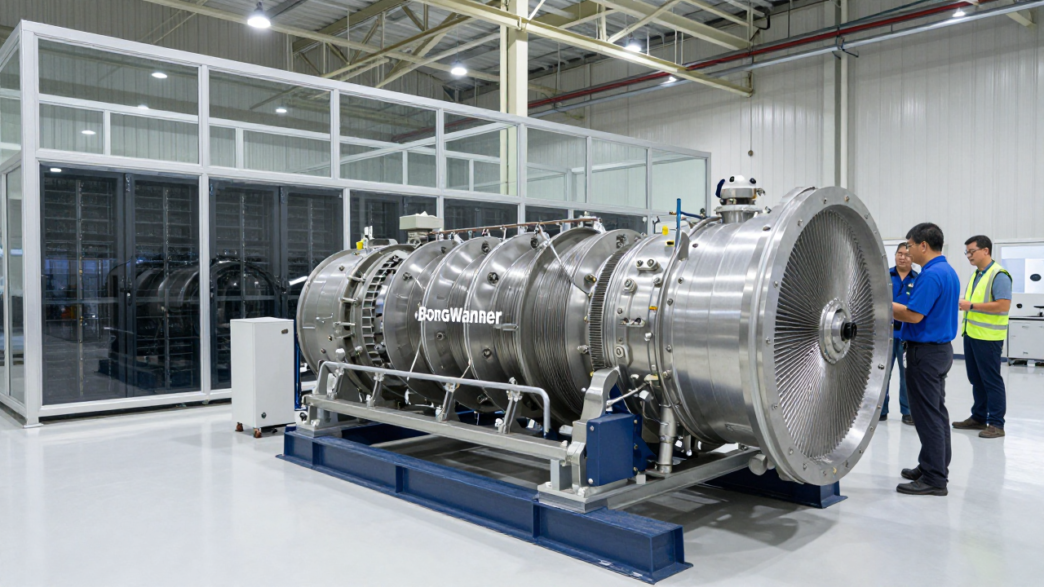
Morgan Stanley’s revised target and rating reflect its view that BorgWarner’s potential extends beyond supplying components to automakers. The bank’s reported thesis assigns a substantial role to the company’s planned turbine-generator business, which would provide on-site electricity for data centers facing rising power needs.
The same-day report said Morgan Stanley expects commercial deliveries to begin in 2027 and cited a 2-gigawatt production facility under development in North Carolina. Its $1.2 billion EBITDA estimate encompasses distributed power, with the turbine generator expected to be the principal contributor and other products adding to the opportunity.
The rating change arrived as shares had reportedly pulled back about 11% over the prior month. BorgWarner’s move also outpaced broad U.S. indexes during the morning session, according to Investing.com, suggesting the analyst action was the main immediate company-specific catalyst rather than the market’s general advance.
TurboCell agreement sets out the company’s plan
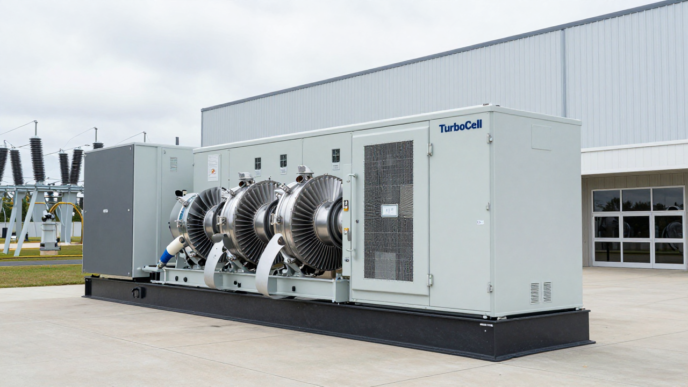
BorgWarner announced in February that it had signed a master supply agreement with TurboCell, a subsidiary of data-center infrastructure developer Endeavour, to supply a modular turbine-generator system. The company said production is expected to begin in Hendersonville, North Carolina, in 2027, with initial installed capacity of 2 gigawatts.
The product is intended for on-site power applications, including bridging and backup electricity, according to BorgWarner’s announcement. TurboCell is offered through Endeavour’s Edged Infrastructure division. The company described the system’s fuel flexibility and response characteristics as product advantages; those are company claims, rather than independently established performance outcomes in commercial operation.
The announced agreement gives the AI-power thesis a specific product and commercial relationship behind it, but does not establish how quickly demand will build or how much revenue BorgWarner will ultimately earn. Morgan Stanley’s estimates therefore depend on execution and future customer demand, alongside the company’s ability to bring capacity online as planned.
Automotive business remains the earnings base
BorgWarner remains primarily an automotive supplier, and Morgan Stanley’s thesis explicitly includes the company’s existing combustion-engine and hybrid-vehicle business. Its recent results show the scale of that base: in the second quarter of 2026, net sales were $3.648 billion, up about 0.3% from a year earlier, while adjusted earnings were $1.42 per diluted share, up 17.4%, according to the company’s filing with the Securities and Exchange Commission.
Organic sales declined about 1.2% year over year in the quarter, excluding currency effects. BorgWarner said the comparison improved when excluding a roughly $60 million decline in Battery Energy Systems sales. The reported figures offer a mixed backdrop: adjusted earnings rose, while underlying sales were slightly lower on an organic basis.
The company also raised its 2026 adjusted earnings-per-share outlook after reporting those results. That guidance concerns the current year and is separate from Morgan Stanley’s longer-range projections for the distributed-power business.
What remains uncertain
For now, the 2027 start date and initial capacity are company plans, while the earnings contribution cited in the upgrade is an analyst estimate for 2030. BorgWarner’s February announcement and its financial filings do not establish that the projected 2030 EBITDA will be achieved, nor do they detail a guaranteed production ramp beyond the initial capacity.
The next major operational milestone identified in the company’s announcement is the planned start of production in Hendersonville in 2027. Whether the data-center power line becomes a material source of earnings will depend on that rollout and subsequent demand; neither the analyst upgrade nor the shares’ one-day rise resolves those uncertainties.