

Updated:
China has opened an anti-dumping investigation into imports of p-nitrotoluene from the European Union, escalating trade friction between the two economic partners just days before planned high-level talks. The Commerce Ministry announced the probe on Saturday, October 3, 2026, saying it followed an application by China’s domestic industry.
The case focuses on a chemical intermediate used in producing dyes, pigments, pesticides and pharmaceuticals. Chinese authorities said preliminary evidence submitted by applicants showed EU import prices fell by nearly 60% cumulatively between 2022 and 2025, while import volumes remained high. Those are allegations supporting the launch of an investigation, not a final finding of dumping or injury.
What the investigation covers
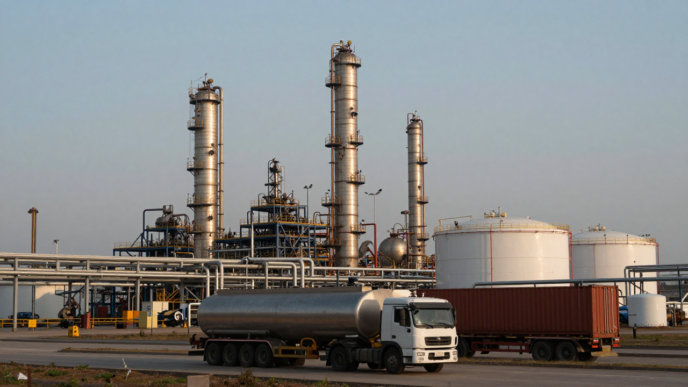
p-Nitrotoluene, also called para-nitrotoluene or 4-nitrotoluene, is an intermediate used in manufacturing other chemicals. Its downstream uses connect the investigation to several industrial supply chains, including colorants, agricultural chemicals and medicines. China is itself a major producer and exporter of the compound, according to Reuters.
The Commerce Ministry said the applicants argued that the imports had harmed the production and operations of China’s domestic industry. It said the filing met the requirements for initiating an investigation under Chinese law and World Trade Organization rules, and that the inquiry would proceed under applicable regulations with the rights of interested parties protected.
The ministry’s announcement did not identify the applicant companies in the reporting available at publication, nor did it disclose import volumes, alleged dumping margins or the value of the trade affected. It also did not announce any immediate tariff or other import restriction. The probe’s opening therefore signals scrutiny rather than a settled trade remedy.
Price allegations remain preliminary
The nearly 60% price decline cited by Chinese authorities covers the period from 2022 through 2025. The figure is cumulative, and the published reports do not provide annual price data, a comparison with domestic Chinese prices, or a calculation of any margin by which EU exports may have been sold below a benchmark.
Those details matter because an anti-dumping investigation examines more than falling prices: authorities assess whether imports are being sold at unfairly low prices and whether they cause injury to local producers. The ministry’s statement describes preliminary evidence from the application; it does not establish that the legal tests have been met. The investigation will allow authorities to examine evidence from exporters, importers and domestic producers before reaching a conclusion.
Probe lands amid wider EU-China trade friction
The new case comes against a backdrop of increasingly contentious trade relations. The Associated Press reported that the EU has used or considered measures affecting Chinese imports, including electric vehicles and fast fashion, while both sides have turned to trade-defence investigations and other restrictions in disputes over market access and industrial competition.
The EU has also pursued its own anti-dumping cases involving Chinese goods. Those separate proceedings do not determine the outcome of China’s p-nitrotoluene inquiry, but they illustrate how trade investigations have become one channel for addressing bilateral disputes. The available reporting does not establish that Beijing’s latest probe is formally retaliation for any particular European measure.
Trade talks scheduled for October 8 and 9
EU trade officials are scheduled to travel to Beijing on October 8 and 9 for high-level discussions intended to ease tensions, the Associated Press reported. The investigation’s announcement comes five days before those meetings are due to begin, placing a new trade dispute on the agenda for a relationship already under strain.
It remains unclear how long the investigation will take, whether Chinese authorities will impose provisional measures, or what response the European Commission or affected exporters may make. The ministry has said it will conduct the inquiry under its laws and WTO rules, but no determination or schedule beyond the launch was specified in the contemporaneous reporting.
For European chemical exporters and Chinese users of the compound, the immediate significance is added regulatory uncertainty rather than a confirmed change in trade terms. The eventual impact will depend on the evidence gathered, the investigation’s findings and any measures China decides to adopt.