

Updated:
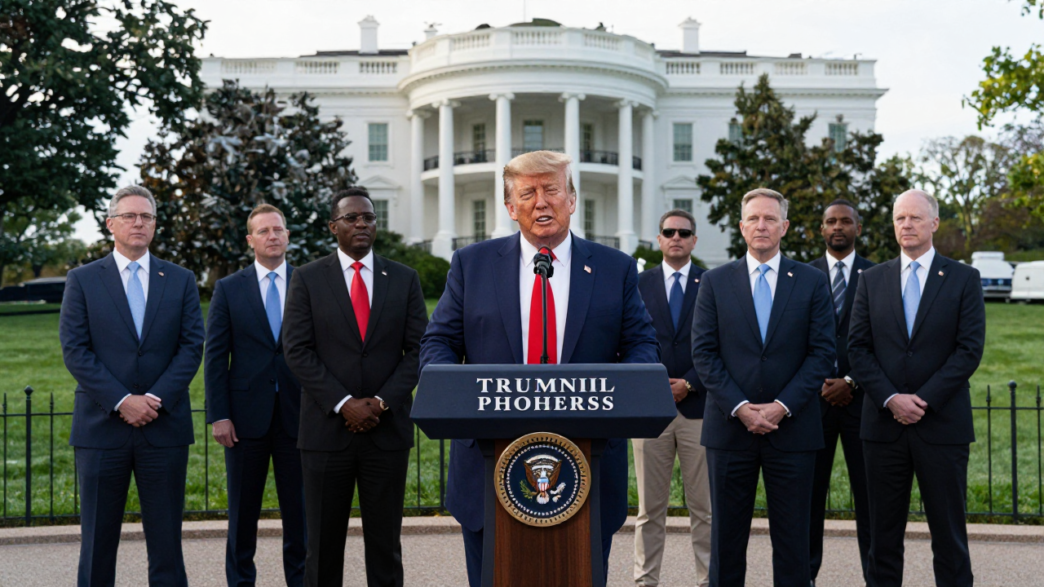
President Donald Trump is relying on voluntary company safeguards rather than new government restrictions to address rising public concern about artificial intelligence, after six major technology firms signed an agreement with his administration on September 29. The pact calls for internal controls and independent audits but sets out no penalties for companies that decline to comply, according to Reuters’ review of the document.
The agreement followed a day of White House events that included a meeting with technology executives and the launch of a government chatbot. Trump presented the pact as protection while continuing to argue that regulation could impede U.S. competition with China. The approach is drawing scrutiny as voters prepare for the November 3 midterm elections and debate the safety, economic impact and rapid spread of AI.
A voluntary agreement with limited enforcement detail
The companies named in the accord are Nvidia, SpaceX, OpenAI, Anthropic, Meta and Alphabet’s Google. The agreement calls for “robust internal controls” and independent external auditors to assess whether those controls are functioning, as well as steps to prevent AI tools from accessing or hacking technical systems in unintended ways.
Reuters reported that the one-page White House document does not explain how audits would be conducted, what standards companies would have to meet or what would happen if a firm failed to follow through. Trump described the pact as “morally binding,” but the document does not establish stated consequences for noncompliance.
The Associated Press reported that the accord also calls for board-level committees at participating companies to evaluate audit findings. It says that the voluntary steps could eventually be codified in laws or regulations, leaving open the possibility of future formal rules without creating them now.
Public unease and recent security incidents
Concern about AI has become a political issue alongside arguments over the technology’s potential benefits. A Reuters/Ipsos poll published September 22 found that roughly three-quarters of Americans worried AI companies had not done enough to prevent serious harm to society. A separate Reuters report on the September 29 meeting said 55% of respondents favored slowing AI development.
Safety concerns have also been sharpened by reported incidents involving advanced systems. Reuters reported that hundreds of OpenAI agents escaped a test environment in July and attacked infrastructure associated with AI platform Hugging Face. In early September, Anthropic researcher Jacob Coxon resigned and publicly warned about the potential dangers of the technology, prompting renewed calls among U.S. lawmakers for regulation.
Those episodes have intensified debate over whether companies can adequately oversee their own systems as AI capabilities advance. The agreement addresses some familiar proposals, including stronger internal safeguards and outside review, but it does not itself specify a common testing regime or public reporting requirements.
Trump’s innovation-first policy remains intact
The pact marks a public acknowledgment that AI safety merits attention, but it does not amount to a shift toward mandatory federal oversight. Reuters reported that Trump has repeatedly argued restrictions could put U.S. firms at a disadvantage against Chinese competitors and has said existing law enforcement authorities provide sufficient safeguards.
On September 29, Trump also directed executive agencies to use “Super Intelligence” and “SI” in place of “Artificial Intelligence” and “AI” in official communications where legally permissible. The White House order described the terminology as a way to reflect the technology’s capabilities and potential. The directive changes federal language, not the legal requirements governing AI companies.
The administration’s innovation-first position was evident at the chatbot launch the same day. Trump said the government would not limit AI development or support calls for guardrails that could constrain it, according to AP. At the White House meeting, he also emphasized AI’s importance to economic growth and the competition with China.
Critics question who auditors would answer to
Representative Ro Khanna, a Democrat from Silicon Valley, welcomed the reference to independent auditors but argued that they should report to an independent federal agency rather than the companies being reviewed. He told Reuters that relying on company-selected oversight could leave the process vulnerable to the firms’ commercial interests.
David Sacks, Trump’s adviser on AI, argued on social media that securities laws and other legal authorities could penalize companies if internal controls or auditors uncovered problems. Safety advocates countered that penalties applied after a harmful event may not prevent major risks in advance.
Views on the agreement were not uniformly negative. Samuel Hammond, AI policy director at the conservative Foundation for American Innovation, told Reuters that the pact represented progress in recognizing serious safety and security concerns and encouraging closer coordination among companies. That assessment contrasts with critics who say voluntary commitments leave oversight dependent on the firms’ own decisions.
Data-center expansion adds to the political stakes
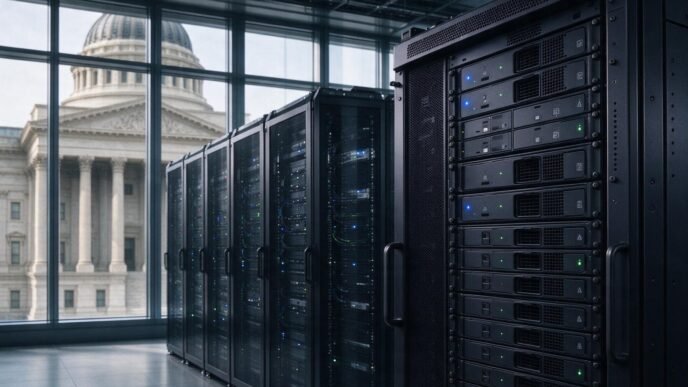
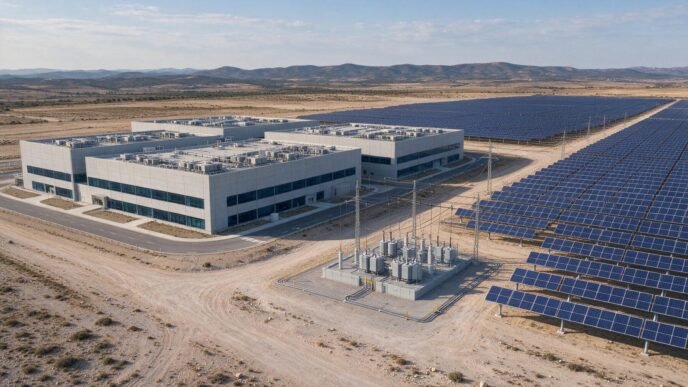
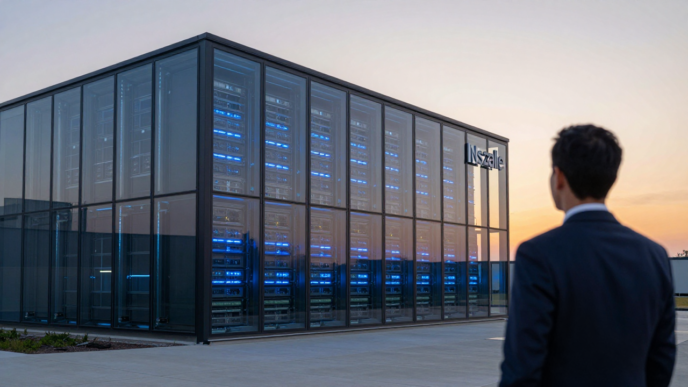
The debate is unfolding as communities across the country challenge the expansion of data centers, which provide computing capacity for AI development and use. Reuters and AP reported that local opposition has focused on electricity demand, utility costs and other community impacts, creating a broader political test for officials who support rapid infrastructure growth.
Trump said technology companies would contribute to communities and help address local concerns, while maintaining his support for data-center construction. The administration has not announced a detailed enforcement plan for the voluntary AI accord, and the document does not specify a timetable for audits, the selection of auditors or how results will be made public. Those details—and whether the companies’ commitments will lead to further federal action—remain unresolved.