

Updated:
Alaska LNG developer Glenfarne says shipping liquefied natural gas from the state’s North Slope to Asian buyers would cost at least 65% less than shipping it from the U.S. Gulf Coast, an advantage the company argues helps justify the project’s substantial construction bill. The claim, relayed by Glenfarne communications director Tim Fitzpatrick to Reuters on Sunday, October 4, comes as analysts question whether the project’s location can compensate for infrastructure costs far above those of competing U.S. export developments.
The proposed project would connect North Slope gas to an export terminal in southern Alaska through an approximately 800-mile pipeline. Glenfarne estimates the integrated development will cost $44.5 billion to $54.5 billion. The company’s shipping comparison is a developer estimate, not a demonstrated operating-cost result: the project has not been built, and the reported figures do not establish the total delivered cost of its LNG against competing supplies.
Shipping savings are central to Glenfarne’s case
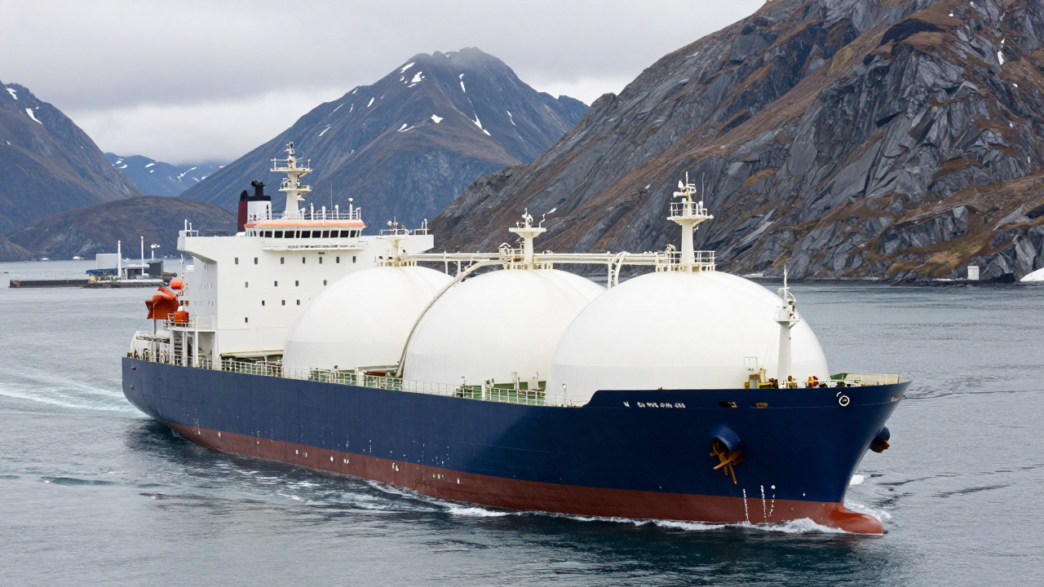
Alaska’s position on the Pacific rim could shorten voyages to major Asian LNG markets compared with cargoes departing the Gulf Coast, which must travel through the Panama Canal or take a longer route around South America. Glenfarne argues those shorter journeys would reduce transport expenses enough to make the project competitive despite the cost of moving stranded gas from the North Slope and processing it for export.
The distinction matters because shipping is only one part of the economics. The project also requires a long pipeline, a gas-treatment facility and a liquefaction and export terminal. The available reporting does not provide a full, independently verified comparison of shipping savings against those capital and operating costs.
Infrastructure drives the multibillion-dollar estimate
Glenfarne’s published cost range assigns $13.2 billion to $16.9 billion to the pipeline, $7.7 billion to $9.2 billion to a North Slope gas-treatment plant, and $23.6 billion to $28.4 billion to the liquefaction terminal. The total would support a planned export capacity of about 20 million metric tons a year.
That price tag has drawn scrutiny because U.S. Gulf Coast projects can connect export terminals to extensive regional gas networks rather than build a comparable cross-state pipeline from a remote supply region. Reuters reported on October 1 that recent U.S. LNG projects approved since Russia’s invasion of Ukraine have generally been built for about $1 billion per annual metric ton of capacity or less. Glenfarne’s overall Alaska estimate equates to roughly $2.2 billion to $2.7 billion per annual metric ton.
Analysts question whether buyers will pay for the location
In the October 1 Reuters report, analyst Jason Feer of Poten & Partners questioned whether Asian buyers would pay a premium for supply security, saying evidence of such willingness had not emerged. Alex Munton of Rapidan Energy Group said the project might not meet commercial investment thresholds. Supporters counter that proximity to buyers including Japan, South Korea and Taiwan offers strategic value and lowers voyage costs; another analyst cited Canadian projects as potential competitors in the region.
The disagreement highlights the gap between Glenfarne’s shipping-cost argument and the broader financing test. Lower transport expenses may improve the project’s economics, but they do not alone prove that customers will commit to prices and contract terms that support the full investment. The available reporting does not include independently audited shipping-cost calculations or a completed financing plan.
Sales commitments and South Korean role remain unresolved
Glenfarne has said it has identified customers for 13 million metric tons a year and is seeking commitments for 16 million tons annually to support project financing. Those figures leave a gap between reported customer volumes and the company’s stated financing target; they do not, on their own, indicate that all identified demand represents binding, completed sales contracts.
The financing picture also remains unsettled. President Donald Trump said on Friday that South Korea would help finance the Alaska LNG effort as part of a broader $200 billion investment package involving U.S. projects. Seoul quickly indicated that its participation in Alaska LNG had not been decided and that it would assess the project’s commercial viability.
The project would require further commitments before construction financing can be established. The central unresolved questions are whether enough buyers will sign agreements on terms that support a final investment decision, whether potential South Korean participation will take a concrete form, and whether Glenfarne’s claimed freight savings can materially offset the project’s higher capital costs. The reporting reviewed for this article did not establish a construction start date or a final investment decision.